
Copper & Aluminum Busbar Bending Machine Selection Comparison Series Part 5: Control System
For energy‑storage, switch‑gear cabinet and new‑energy busbar processing factories, the numerical control control system plays a decisive role whether copper & aluminum busbar bending machines can achieve long‑term stable mass production. Many enterprises focus on mechanical structure, bending accuracy and feeding device during model selection, yet often overlook the reliability of software systems. Once problems such as system lagging, error reports or program loss occur, production‑line shutdown will directly happen and cause considerable production losses. Currently there are two major system solutions for market‑available copper & aluminum busbar bending machines: systems supplied by third‑party professional manufacturers, and self‑developed systems from equipment makers. Obvious gaps exist between the two solutions in stability, after‑sales service and iterative upgrading.
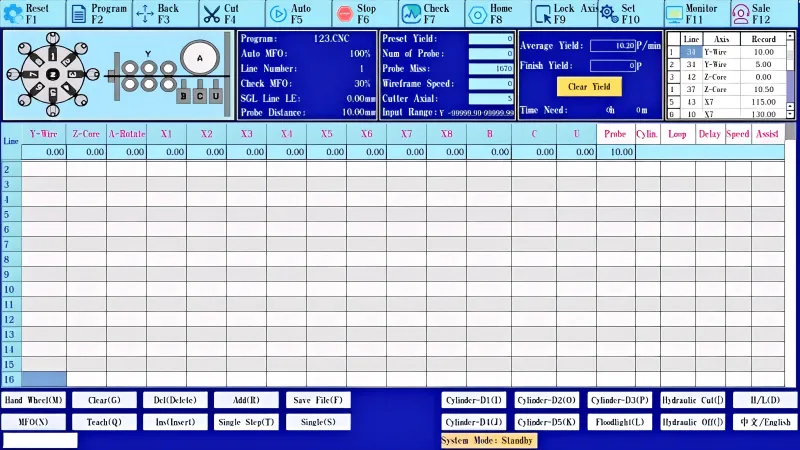
1. Third‑party Professional Supplied Control System: Advantages of Belang Solution
Belan copper & aluminum busbar bending machines adopt mature products from professional CNC system service providers. Verified by massive long‑term industrial‑equipment market applications, such systems feature well‑developed codes and complete underlying logic, with abundant operation databases for complex busbar bending conditions including multi‑axis linkage, twist bending, vertical bending and flat bending.
Its core advantages are listed below:
1.1 Higher Operation Stability
Specialized system vendors focus deeply on CNC technology and conduct repeated stress tests. Risks of crash, program disorder and data loss remain low during non‑stop long‑hour processing, making them suitable for 7×24‑hour mass production in factories.
1.2 Guaranteed BUG‑fix Response
Should software loopholes emerge during operation, professional system R&D teams can perform root‑cause investigation and push patches timely to fix faults and shorten shutdown duration.
1.3 Sufficient Room for Future Upgrades
Mature third‑party systems support continuous function iteration. New functions such as offline programming, 3D bending simulation and spring‑back compensation can be expanded later to extend equipment service life.
1.4 High Maintenance Compatibility
These are general‑purpose market‑available system models. When on‑site technicians from equipment suppliers are unavailable, external engineers familiar with this system can carry out debugging and maintenance, avoiding technical lock‑in.
Based on externally‑sourced systems, Belang conducts secondary adaptation and optimization with self‑owned busbar processing technologies. The system achieves deep matching with 8‑arm multi‑axis mechanical structures, delivering smooth calculation and seamless program switching for complex 3D busbar bending.
2. Equipment‑maker Self‑developed System: Features & Potential Pain Points of Other Brands
Some copper & aluminum busbar bending machine brands deploy self‑developed control systems. Self‑developed systems allow manufacturers to deeply customize functions matching their own mechanical structures, with well‑fitted basic functions and controllable procurement costs in early‑stage deployment. Nevertheless, self‑developed systems carry multiple hidden risks for long‑term production.
2.1 Stability Faces Great Challenges
Restricted by software‑development team scale and test‑sample volume, certain self‑developed systems lack verification under long‑duration high‑load mass production. Lagging and error‑reports are more likely to occur with frequent bending‑program switching and complex multi‑bend‑position workpieces.
2.2 Limited Fault‑repair Speed
System BUGs can only be solved by the manufacturer’s internal R&D staff. If key R&D personnel change, problem‑investigation cycles will be prolonged and production lines suffer long waiting downtime. External engineers are generally unable to intervene for repairs.
2.3 Difficult Post‑purchase Upgrading
Many self‑developed systems iterate slowly. When enterprises intend to add new bending processes or connect to factory MES production‑management systems afterwards, new‑function expansion may fail and equipment faces premature technical aging.
2.4 Closed‑loop Technology Architecture
Source code of control systems belongs to equipment manufacturers. Maintenance heavily relies on original‑manufacturer technical support.
Self‑developed systems fit production scenarios with simple working conditions, fixed workpiece specifications, infrequent program switching and low demand for system expandability.
3. Comparison of Two System Solutions on Long‑term Factory Production Benefits
Models equipped with self‑developed systems enjoy advantages in short‑term procurement price. However within a 3‑5‑year service cycle, system stability, downtime loss and post‑upgrade cost become critical factors affecting total cost of ownership.
- Third‑party mature externally‑sourced system: Fit multi‑variety, small‑batch, frequent‑change‑over and complex 3D busbar processing. It lowers shutdown risks, supports system iteration and delivers longer service life, which is the preferred option for new‑energy busbar processing factories.
- Equipment‑maker self‑developed system: Suitable for enterprises with single‑type products, simple bending processes and rare new‑processing‑requirement updates.
4. Machine‑selection Suggestions & Inquiry Guidance
When purchasing copper & aluminum busbar bending machines, besides comparing mechanical hardware configurations, enterprises must take control‑system sources as a key evaluation item. Make comprehensive assessment combining order complexity, production‑line load and process‑expansion plans for the coming 2‑3 years.
Belan Machinery delivers professional automotive wire‑forming solutions. If you want to know more details of control systems for different‑brand copper & aluminum busbar bending machines, real‑world mass‑production cases, or need one‑on‑one machine‑selection evaluation, please contact us for professional consulting proposals.
 +86-18098256570
  Email
Email

