
Copper Busbar Bending Machine Selection Comparison Part 4: Pros & Cons of Operation Platform Structures
In new‑energy, energy‑storage and electrical switchgear busbar mass‑production scenarios, most manufacturers focus on bending accuracy, feeding mechanism and multi‑axis performance when choosing a copper busbar bending machine. Yet the operation‑platform design is often overlooked.
As the core interaction area for machine debugging, parameter modification, program editing and sample production, the operation platform directly affects daily debugging efficiency, model‑change speed, operator fatigue and overall production capacity. Two mainstream structures are available for different brands of copper busbar bending machine: movable operation platform and fixed operation platform, bringing very different real‑world production experiences.
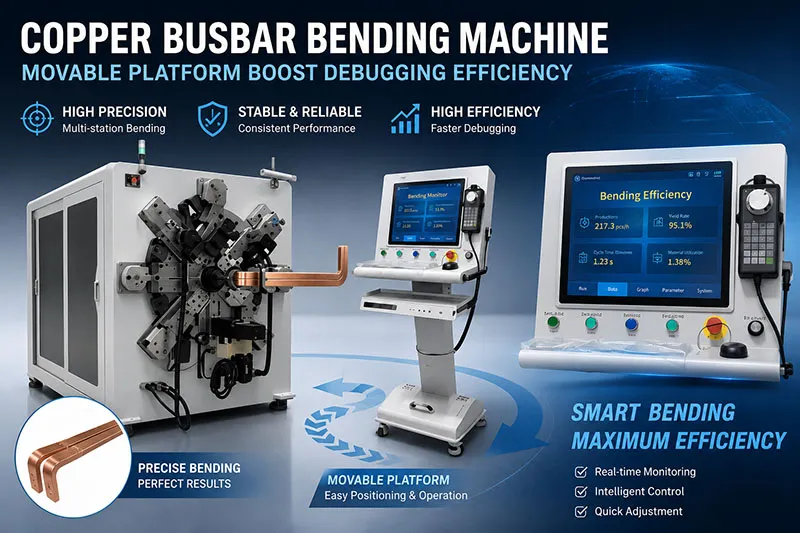
Movable Operation Platform: Advantages on Belan Machines
Belan copper busbar bending machine are equipped with movable operation platforms, well‑suited for long‑size busbar workpieces. Finished copper & aluminum busbars are usually long, with multiple bending points and complex 3‑D shapes. Operators need to observe workpieces while adjusting parameters during processing.
The movable console can be pushed and pulled freely and follows the working position. Operators are not limited to one fixed spot; they can revise programs, fine‑tune angles and correct feeding parameters right beside the bending position.
Key Practical Benefits
1. More accurate debugging: Observe bending status at close range and correct deviations timely to avoid mass defective parts.
2. Faster model change: For new‑product sampling and frequent specification switching, on‑site adjustment eliminates repeated walking back‑and‑forth.
3. Better man‑machine experience: Suitable for long workpieces and multi‑bend 3D busbar processing. One operator can complete debugging and mass‑production monitoring efficiently.
4. Compatible with complex processes: For combined flat‑bending, upright‑bending and twisting processes, the movable platform allows flexible viewing angles and greatly reduces debugging difficulty.
Belan copper busbar bending machine features further optimized movable platforms with smooth sliding, firm positioning and zero shaking. No position drift occurs under high‑frequency long‑hour debugging. Balancing flexibility and stability, it fits new‑energy busbar production lines with high mix, small‑batch and frequent model‑change requirements.
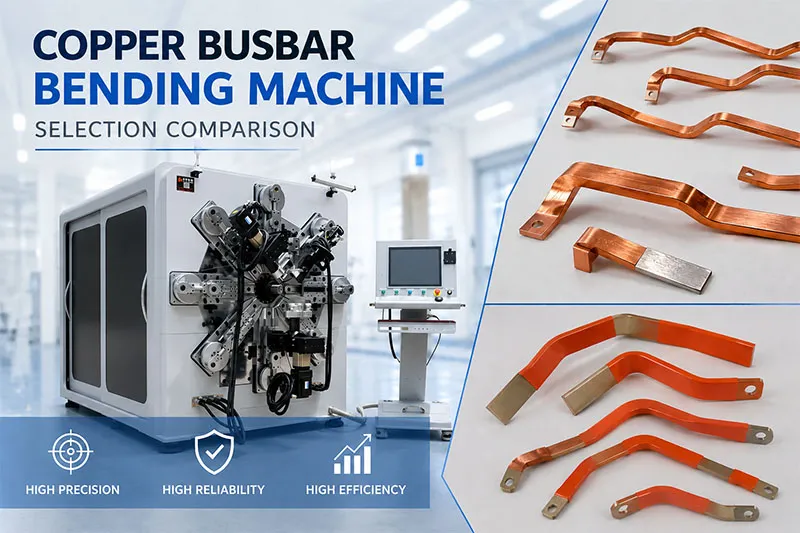
Fixed Operation Platform: Common Pain Points for Other Equipment
Other Brands generally adopt body‑integrated fixed operation platforms for their copper busbar bending machine. The screen and keypad cannot be repositioned.
Obvious drawbacks appear when processing long copper‑aluminum busbars, multi‑segment bends and complex 3D busbars:
1. Cumbersome & inefficient debugging: Large distance between forming zone and operation station. Operators must walk repeatedly between workpiece and console, interrupting debugging workflows.
2. Longer cycle for model switching: New‑part sampling and specification changes take more time due to constant back‑and‑forth movement, lowering overall workshop turnover.
3. Difficult real‑time error correction: Cannot view forming details closely. Angle deviation, position offset and asymmetric forming defects tend to occur.
4. Higher operator fatigue: Frequent walking increases labor intensity under high‑frequency sampling & model‑change conditions, which indirectly harms production stability.
The fixed‑type platform only has merits of simple construction, low cost and high mechanical durability. It is fit for rough‑processing scenarios with fixed specifications, long‑run mass production and rare model changes. It poorly matches current new‑energy busbar demands for multi‑specification, small‑batch and high‑precision manufacturing.
Real‑World Impacts of Two Platform Types on Mass‑Production Factories
From long‑term operation perspective, the platform structure of your copper busbar bending machine determines factory‑wide model‑change cost and debugging efficiency.
‑ Movable platform: Ideal for manufacturers with diverse orders, frequent model changes and complex 3D busbar requirements. It cuts debugging time, reduces defect rate and raises per‑operator output.
‑ Fixed platform: Only suitable for simple standard busbar production with seldom product updates. It lacks flexibility, offers low debugging fault tolerance and restricts new‑product development and product‑line expansion.
Selection Recommendations & Inquiry Prompt
When purchasing a copper busbar bending machine, do not merely compare hardware specs and pricing. Match platform structure against your actual order profile.
Choose movable‑platform models if you pursue efficient debugging, frequent model‑change capability and complex 3D busbar fabrication. Fixed‑platform machines can be considered only for stable long‑run production of unchanged products.
Belan Machinery delivers professional wire‑forming solutions for automotive industry. If you are unsure which platform fits your workshop workflow, or you need cross‑brand comparison on full‑machine configuration, debugging performance and on‑site process differences, feel free to contact Belan Automation. We provide one‑on‑one professional selection consultation and machine‑testing service according to your busbar dimensions, bending processes and model‑change frequency.
 +86-18098256570
  Email
Email

