
Key Challenges in New‑Energy Copper‑Aluminum Busbar Processing
As new‑energy vehicles, energy‑storage systems and photovoltaic equipment develop toward high integration, lightweight design and smart manufacturing, copper‑aluminum busbars feature increasingly complex structures, raising higher requirements for processing accuracy, insulation‑layer protection and production efficiency. Conventional processing methods require multiple clamping and manual adjustment when handling spatial special‑shaped, coated busbars and multi‑variety small‑batch orders. Belan Automation launches the BL‑TP series copper‑aluminum busbar bending machine, which rebuilds continuous automatic processing logic for new‑energy copper‑aluminum busbars via 3D rotary wire forming, caterpillar‑type feeding and full‑servo linkage control.
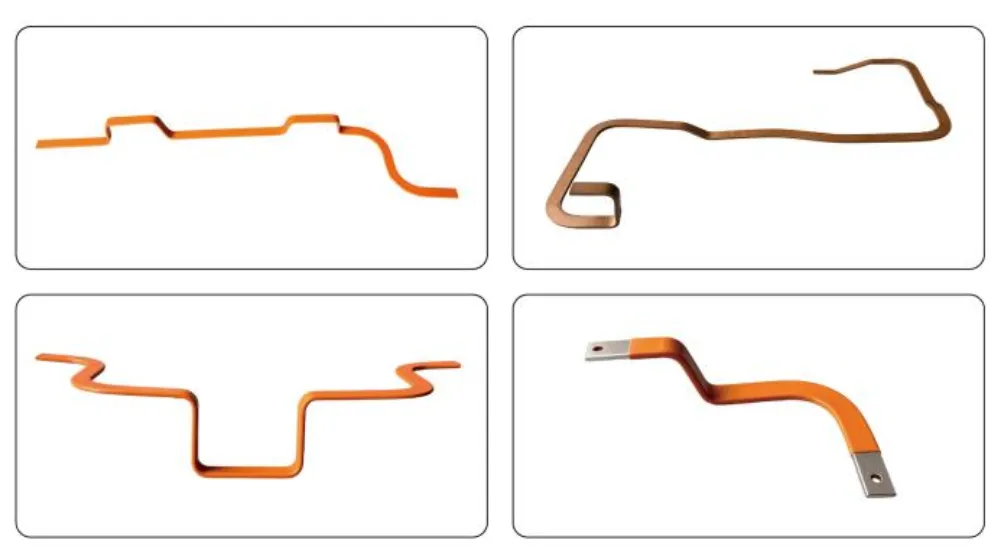
Copper and aluminum busbars undertake critical conductive and connecting functions in new‑energy vehicle power batteries, energy‑storage battery packs, inverters and electric control systems. With compact product layout, busbars have evolved from simple 2‑D plane bending to 3‑D shaped parts with flat bending, vertical bending, twisting and multi‑angle spatial structures.
.jpg.webp)
Efficiency & Accuracy Pain Points of Traditional Processing
Traditional equipment requires manual workpiece flipping, re‑positioning or multi‑machine cooperation for complex spatial busbar production. Extra working steps lower production tact time and introduce positioning errors.
For the multi‑variety small‑batch production mode widely adopted in new‑energy vehicle and energy‑storage industries, frequent equipment and tooling adjustments increase change‑over time and labor costs.
Higher Feeding Requirements for Coated Busbars
Some new‑energy copper‑aluminum busbars are equipped with coated, film‑covered or extruded insulation layers. Ordinary roller feeding covers limited contact area and applies local pressure, which may cause indentation, deformation or damage to insulation layers.
Protecting insulation layers while maintaining feeding accuracy becomes a vital technical point for automatic new‑energy busbar manufacturing.
3D Rotary Wire Technology: Complete Complex Spatial Bending in One Continuous Run
One core advantage of the BL‑TP series copper‑aluminum busbar bending machine is applying mature wire 3D forming technology to copper‑aluminum busbar production.
Adopting central rotary forming structure, the machine realizes multi‑direction continuous forming through core rod and material spatial movement. Different from conventional workflows that demand repeated workpiece moving and flipping, the 3D rotary‑wire design completes flat bending, vertical bending, twisting and multi‑angle spatial bending continuously.
Continuous Forming From Raw Material
For special‑shaped copper & aluminum busbars inside power battery packs and complex connecting busbars for energy‑storage systems, BL‑TP series reduces secondary manual clamping. Raw materials go through multiple processing procedures inside one machine.
This workflow cuts manual intervention and errors caused by repeated positioning, meeting new‑energy industry demands for high consistency and high‑efficiency production.
Caterpillar‑Type Feeding: Insulation‑Layer Protection for Coated Copper‑Aluminum Busbars
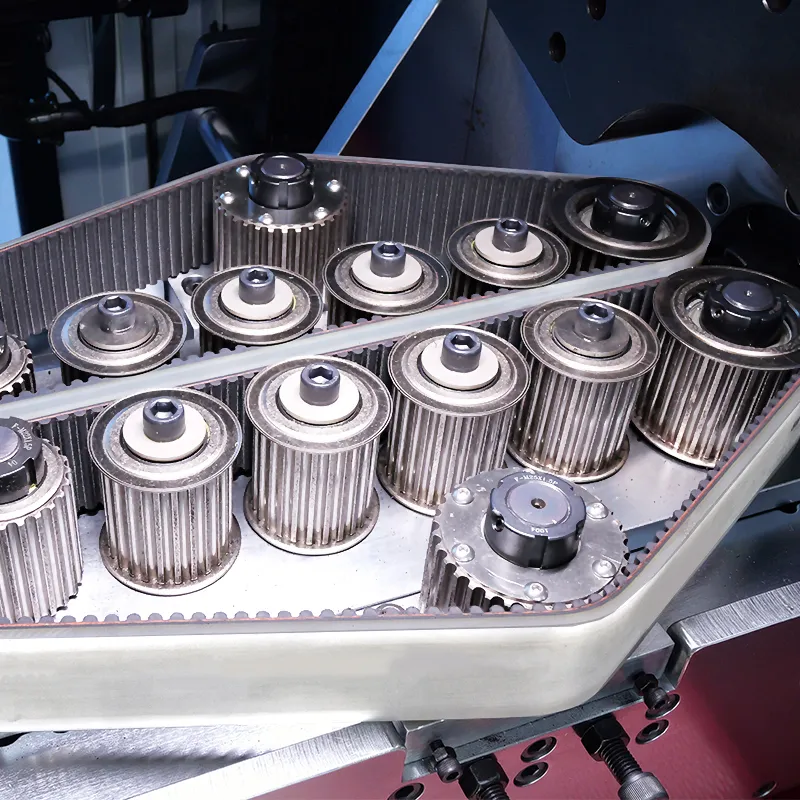
To solve coating crushing risks caused by traditional feeding modes, the BL‑TP series adopts caterpillar‑type feeding structure.
Compared with roller feeding, caterpillar‑type feeding disperses pressure over larger contact surfaces. With special coated components, it ensures stable feeding and mitigates local squeezing on insulated busbar surfaces.
Compatibility for Multiple Busbar Specifications
The machine processes thin‑wall copper‑aluminum busbars with thickness 2‑7 mm and width 8‑50 mm. Feeding pressure can be adjusted for different product specifications.
For new‑energy component manufacturers, this design minimizes downtime caused by frequent feeding‑part replacement and accelerates change‑over among various products.
Full‑Servo Drive for High‑Accuracy & Clean Production
The BL‑TP series is driven by full‑servo systems. Multi‑axis coordinated control delivers precise cooperation among different forming actions. Bending‑angle accuracy stabilizes at ±0.2°. Combined with spring‑back compensation logic, it improves forming consistency for complex parts.
Compared with traditional hydraulic equipment, all‑electric servo design eliminates hydraulic oil systems, avoiding oil leakage and heavy hydraulic maintenance. It fits high‑cleanliness production environments for new‑energy batteries and electrical components.
Meanwhile, MES system connection is supported to enable production data collection, equipment management and smart‑factory integration.
Typical New‑Energy Application Scenarios for BL‑TP Series
New‑Energy Vehicle Power Batteries
Limited inner space of power battery packs requires busbars to fit compact module layouts. 3D continuous forming satisfies processing demands for complex special‑shaped busbars.
Energy‑Storage Systems
Connecting busbars for energy‑storage battery cabinets, PCS and electric systems require high dimensional consistency and insulation protection. Caterpillar‑type feeding performs well for coated or insulated busbars.
Photovoltaic & Inverter Equipment
Photovoltaic inverters adopt copper busbars of various sizes for electric connection. Frequent model change‑overs are common. Automatic 3D forming reduces manual tuning and improves equipment utilization.
How to Select Suitable Copper‑Aluminum Busbar Processing Equipment
When selecting equipment, manufacturers should evaluate real‑world product structures instead of only focusing on maximum processing size and purchase price.
Key evaluation items are listed below:
1. Material specifications: width, thickness and hardness of copper or aluminum busbar.
2. Product structure: whether flat bending, vertical bending, twisting or complex 3D spatial structures are required.
3. Insulation requirements: coated, film‑covered or extruded busbar or not.
4. Production mode: multi‑variety small‑batch manufacturing and frequent change‑over or not.
5. Accuracy requirements: tolerance for bending angle, length and spatial position.
6. Automation demands: MES connection, production data acquisition and smart‑factory integration or not.
For complex special‑shaped busbars used in new‑energy battery packs, energy‑storage and photovoltaic inverters, 3D continuous‑forming solutions reduce manual transferring and repeated positioning from the overall process perspective.
Belan Automation: Redefine Copper‑Aluminum Busbar Processing With 3D Rotary Wire
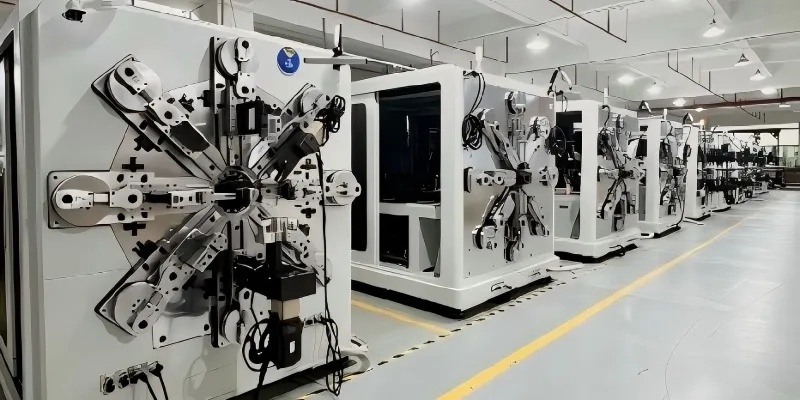
New‑energy busbar manufacturing is shifting from discrete single‑station bending to holistic spatial forming. With 3D rotary‑wire forming, caterpillar‑type feeding, full‑servo control and intelligent interfaces, Belan Automation BL‑TP series copper‑aluminum busbar bending machine integrates complex copper‑aluminum busbar processing into one continuous automatic production workflow.
Belan Machinery provides professional wire‑forming solutions for automotive industries. If your factory manufactures power‑battery copper‑aluminum busbars, energy‑storage busbars, photovoltaic inverter copper busbars or other special‑shaped 3D coated busbars, please send product drawings, material parameters, width‑thickness dimensions and processing requirements to Belan technical team. We will conduct process analysis based on your actual products, recommend proper copper‑aluminum busbar bending machine solutions, and help you assess processing feasibility, automation level and production efficiency.
 +86-18098256570
  Email
Email

